
What they feel < what they see: How brands are using sensory marketing to cut through the attention decline
by Helena Bush - Marketing & Insights Manager
In a world where attention spans are declining, marketing needs to return to one key truth: people don’t remember what they see, they remember what they feel. Flashy visuals and big-budget campaigns are no longer enough. To truly cut through, brands must step inside the shoes of their audience and design for the entire experience - activating the senses to build trust, emotion, and memory.
A sensory, emotional response holds power. 73% of consumers are more likely to purchase a product when the experience feels personal (PwC), and 67% of customers recall brands better when multisensory elements are incorporated (Nielsen). Meanwhile, 90% of shoppers are more likely to revisit a business if the music, visuals, and scent create an enjoyable atmosphere (MRC Data). The evidence is clear.
This isn’t new. We all recall the marketing folklore than supermarkets pump the smell of fresh bread out onto the street to entice you in, or the nostalgia of the iconic 00s Hollister and Abercrombie stores blanketed in potent cologne, or can feel the smooth, seamless iPhone box from Apple’s masterclass in the power of touch.
As attention declines, it’s these sensory strategies - both direct and indirect - that are helping brands cut through the noise.
Direct Sensory Marketing
Direct sensory marketing engages one of the five senses in a tangible, immediate way – music, scent, texture and taste.
1. Touch – proof of trust
Heft and material signals quality, and quality signals trust.
For brands, the immediate thought can be to reduce material cost (often by quality) to improve margins. But if this comes at the loss of customer trust, conversion is lost and the margins are in vain anyway. Touch can convey reliability, permanence and brand identity.
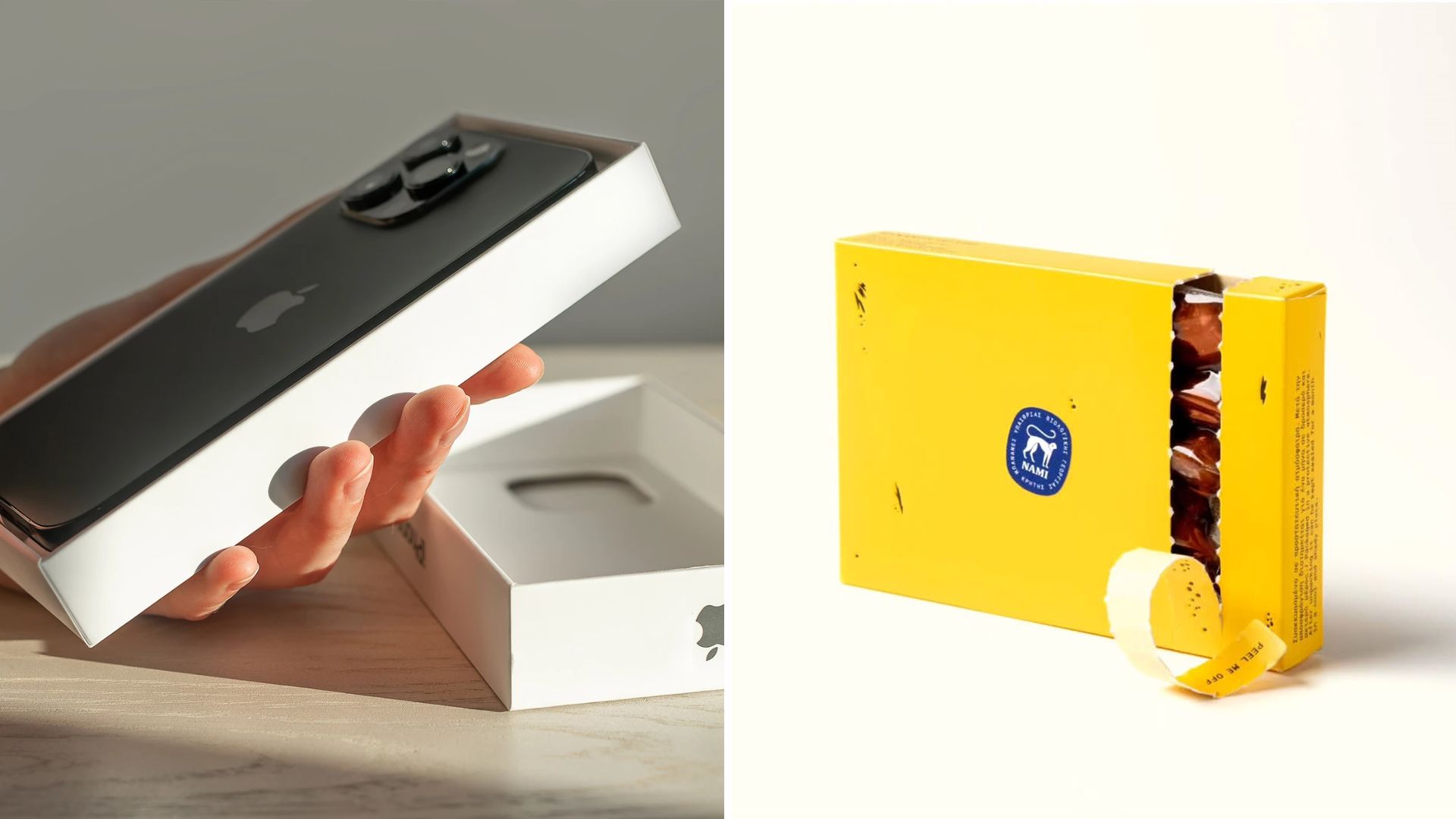
Packaging should not just be seen as an afterthought, but a sensory channel to enhance storytelling. Apple has turned their unboxing into ritual. Smooth edges, slow-release lids, seamless finishes - every detail is engineered to feel effortless, sleek, and premium, to mirror the iPhone inside. Banananami’s peelable banana skin imitation box not only adds an element fun to the simple fruit, but in doing so, implies a brand who cares as much about packaging as quality of product.
And Tony's Chocolonely uses touch to reinforce brand identity. Its deliberately uneven chocolate bars physically embody its disruptive mission to challenge inequality in the cocoa industry. The product’s texture becomes a storytelling mechanism.
2. Sound – elevated experiences
Sound is often a subconscious part of an experience, but it is also an integral part of our leisure landscape. Music offers an avenue for brands to enter a receptive leisurely mindset of a consumer, to enhance the experience.
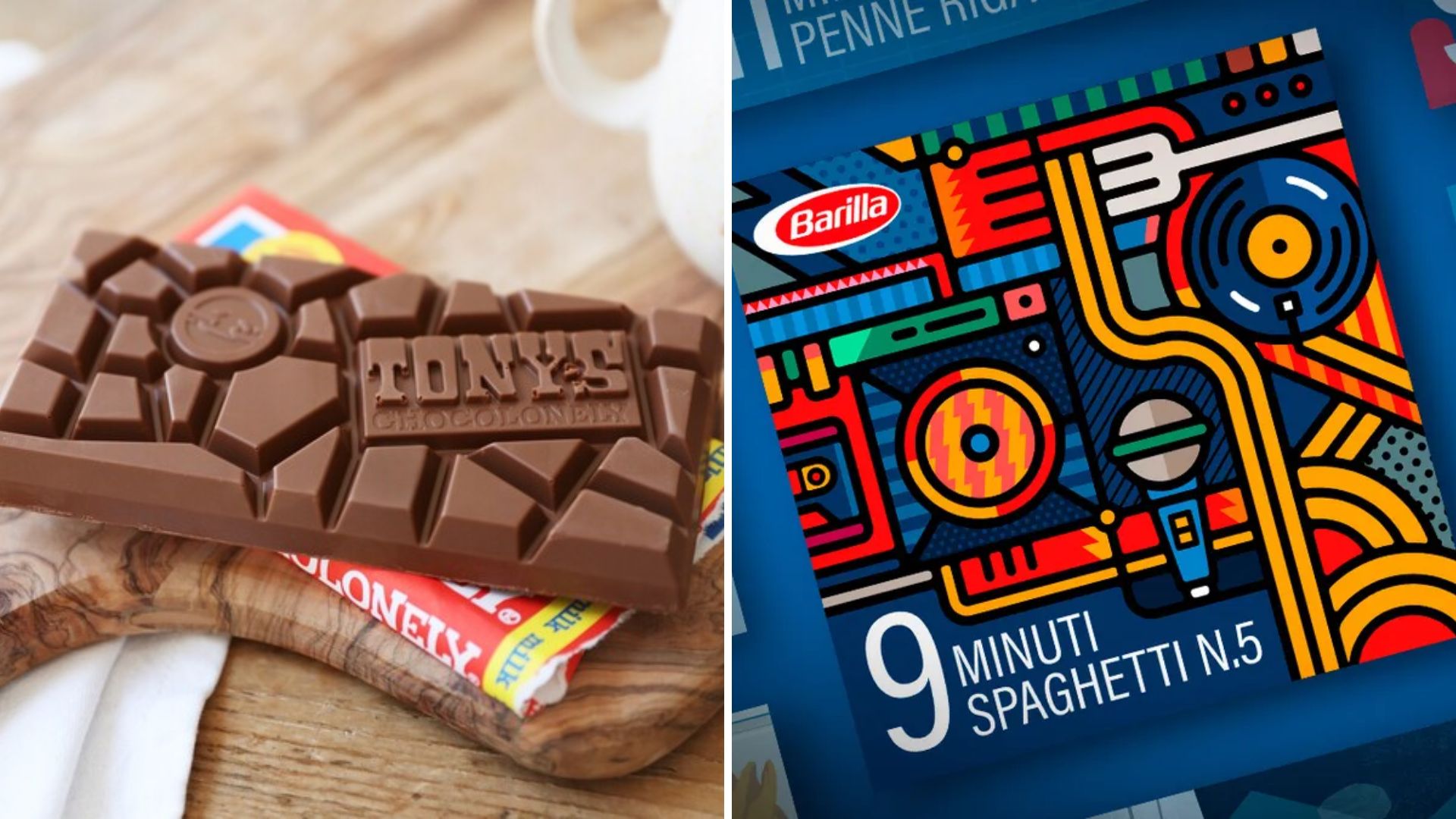
Barilla curated a “Pasta Playlist” comprising of Spotify tracks timed to cook perfect al-dente pasta. Sound previously enjoyed organically (music whilst cooking) is not only facilitated but becomes both practical and brand reinforcement. The senses are helping the customer. Similarly, Galaxy developed a 90-second soundtrack designed to be played while a square melts in your mouth. The result? A multi-sensory indulgence.
And outside of the home, establishments are harnessing background noise to surprise and delight. Grind coffee play David Attenbourgh’s calming voice in their café’s toilets. Their brand thrives of social relevance, and this unexpected audio keeps them a talking point, whilst also making for a pleasant restroom experience.
3. Smell – the sense of nostalgia
We mentioned the potent wafts of millennial fashion shopping, and the power of smell still continues to support brands both in above and below the line campaigns.
Lush position live demonstrations by the entrance of their retail stores to bring their products to life to passing customers and entice them in. OOH, brands like Sure and Rare Beauty are adding ‘scratch and sniff’ to billboards, to stop consumers in the tracks with something they usually pass by, and create a sensory memory.
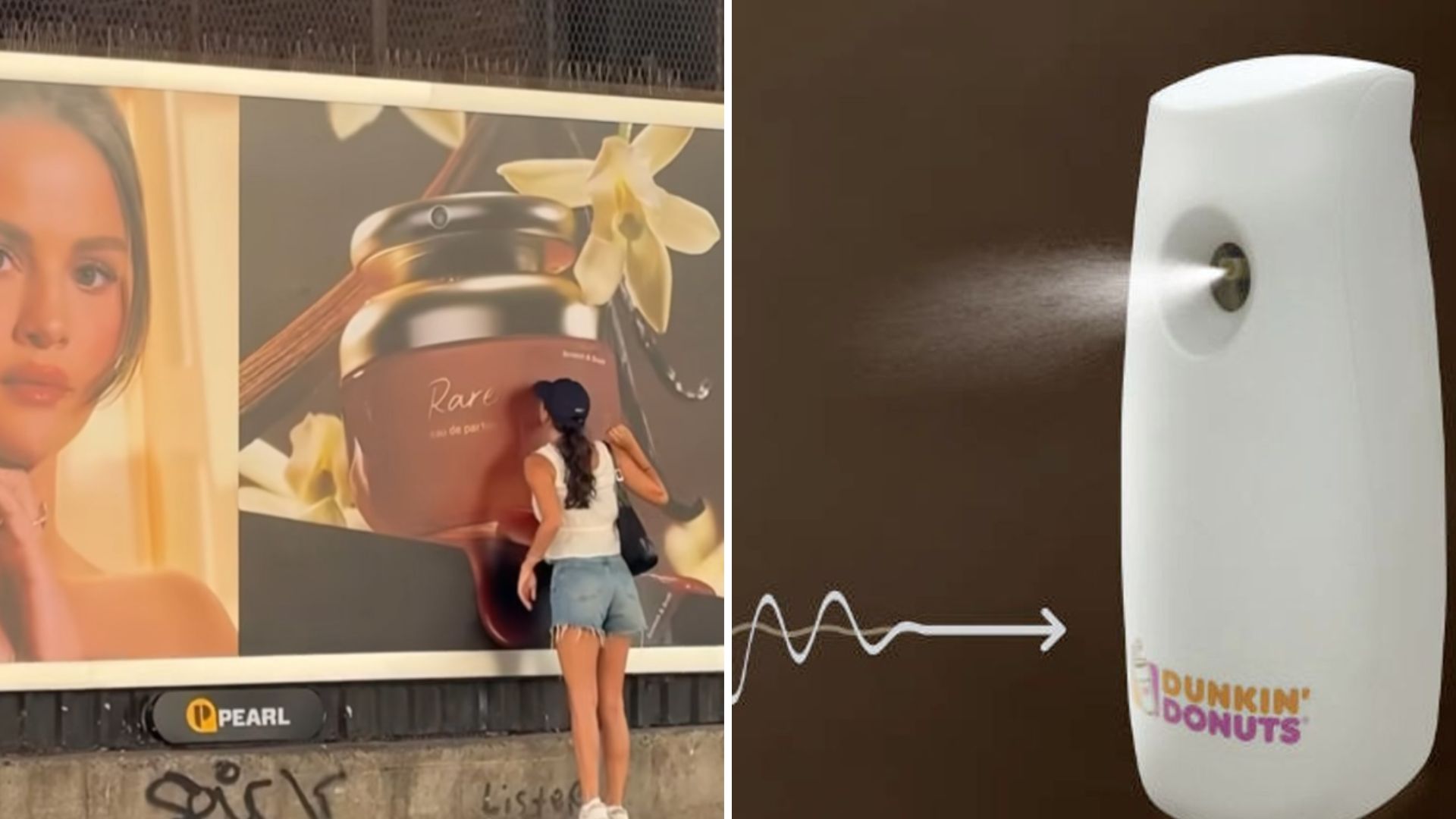
And scent campaigns can have even greater impact with targeted audience insight. In South Korea, Dunkin Donut’s ‘Flavour Radio’ leveraged buses as high-opportunity advertising spaces for stores near bus stops, and activated a campaign that pumped out the smell of fresh coffee every time one of their adverts played on the radio.
Indirect Sensory Marketing
Not all sensory marketing requires physical contact. Some of the most effective strategies invite consumers to imagine the sensory experience - activating memory and desire through suggestion.
1. Metaphoric imagination triggers
Using visual metaphors can bring brand products to life in consumer’s minds by inviting them to draw comparisons they are already familiar with.
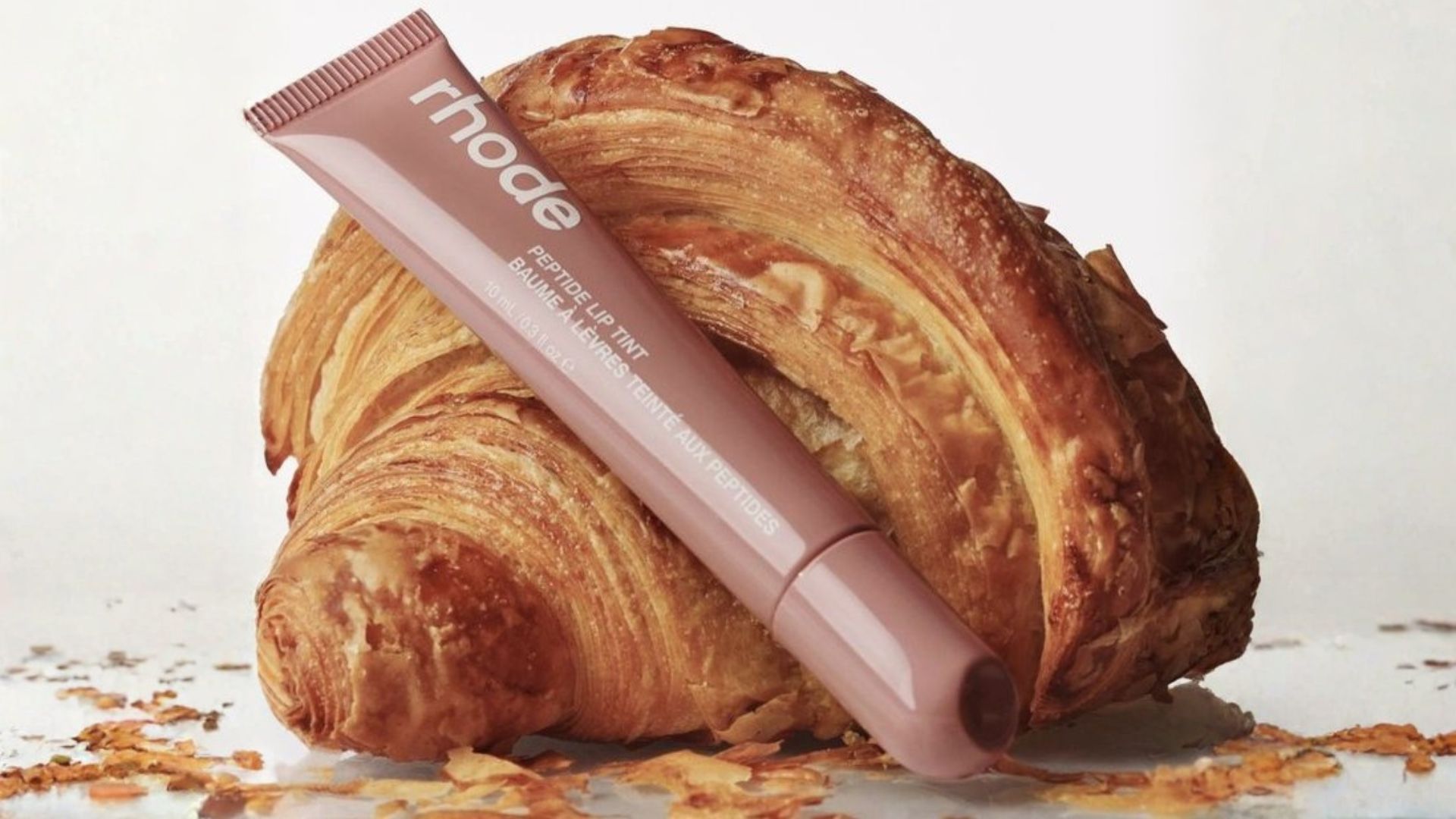
Beauty brands are the strongest leaders of this at the moment – from Glossier’s ‘Cookie Butter’ lip balm campaign aligning with the comfort of sweet biscuits, to Rhode Beauty’s ‘Glazed Doughnut’ lipgloss – as glistening as the iconic pink glossy icing.
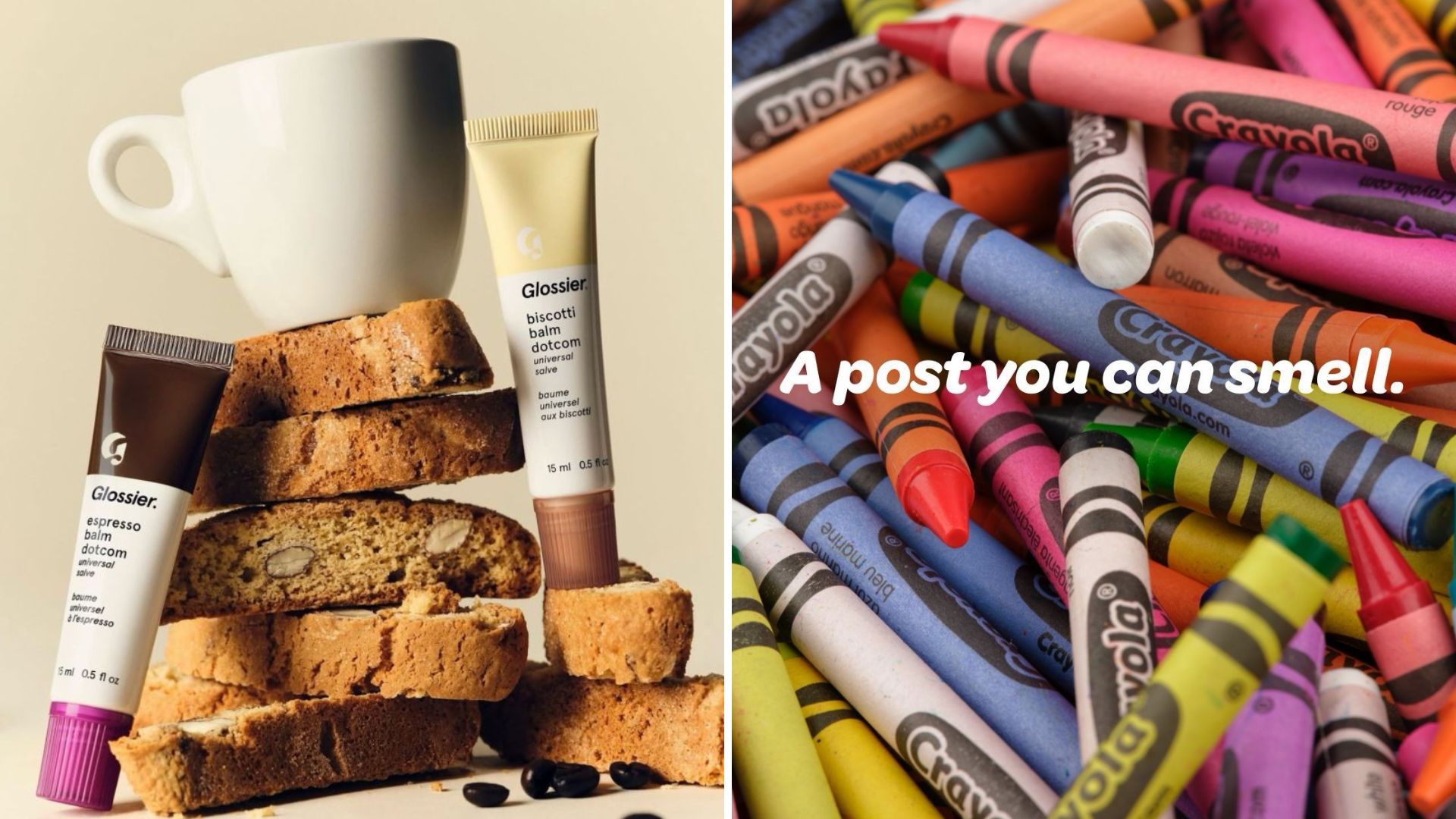
Crayola managed this even without visual, but with exceptional copy. ‘A post you can smell’. Five words the bring instant childhood nostalgia of simpler times, and demonstrated pinpoint understanding of the target.
2. Driving sensory action
Brands can also recruit the senses within activations and campaign materials by prompting consumers to engage in actions that trigger a sensory experience.
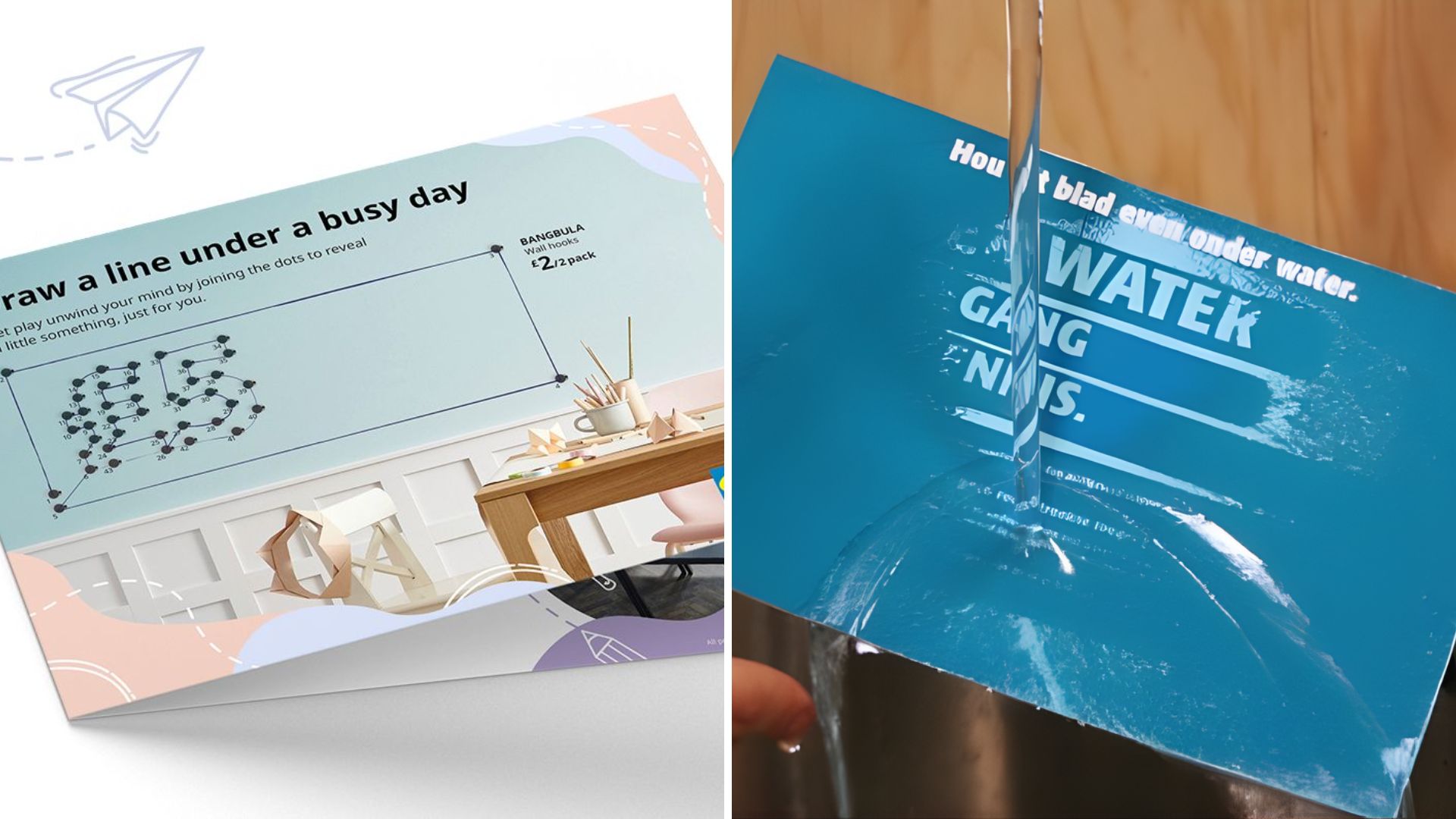
Green Belgium’s Water Day direct mail campaign distributed cards that only revealed their message when immersed in water. As well as creating intrigue, conversation and creative respect, recipients must interact and engage with an unusual tool (water) for the marketing campaign, creating memorability. Similarly, IKEA created a dot-to-dot flier for customers to redeem a £5 voucher. In writing on the leaflet, it not only extends interaction, but reduces the likelihood of throwing away something which has been customized.
Gamification is also a multi-sensory tool. Nike’s shoebox packaging doubles as a football stadium, creating a toy or decoration after the shoes are unboxed.
Key Takeways:
In an overstimulated world, visual noise is easy to scroll or walk past. But a sensory experience demands attention. The brands that win will be those who leverage the senses to make it personal. Because ultimately, what consumers feel is what they remember.


