
What does the future automotive consumer look like?

Introduction
Car buying no longer follows a single, predictable route. Electrification has moved from early-adopter niche to mainstream expectation, cost-of-living pressure is reshaping how people fund a vehicle rather than whether they want one, software is turning the cars into subscriptions, and the research journey has evolved.
For automotive brands, this means the "future consumer" isn't one persona - it's several, often overlapping, mindsets shaping a single purchase decision.
What You Need to Know
- The future automotive consumer isn't just buying a car - they're buying certainty around cost, technology and ownership itself, at a moment when all three feel less fixed than ever.
- Four traits define this shift: The Electric-Curious, The Value Upgrader, The Connected Driver, and The Agile Researcher. Read more detail below.
- Total cost of ownership, not the vehicle itself, is now the biggest brake on EV adoption - despite EVs continuing to gain momentum overall.
- AI is moving from novelty to utility in the car-buying journey: accepted, but only where it visibly earns its place.

Data
- Global EV sales are forecast to grow 19% to 17.4 million units in 2026, taking roughly a fifth of the global automotive market (Global Mobility, 2026)
- 30% of consumers who'd intended to buy an EV have since switched back to considering hybrid or ICE, citing total cost of ownership concerns (Deloitte, 2025).
- 32% of consumers plan to postpone their next vehicle purchase due to financial constraints, and 45% say they'll consider smaller vehicle categories than originally planned (McKinsey, 2026).
- By 2030, 95% of new cars sold will be "connected cars" (Deloitte, 2026).
- A quarter of UK drivers have now bought a car online without seeing it in person first, up from 21% the previous year (AA Cars, 2024).
- Online conversation about AI in the automotive industry has jumped 52% year-on-year, generating over 297,000 mentions (Brandwatch, 2026).
- By 2030, 70% of new cars sold in China are expected to feature advanced assisted-driving technology (ROW, 2025).
The Four Core Personas
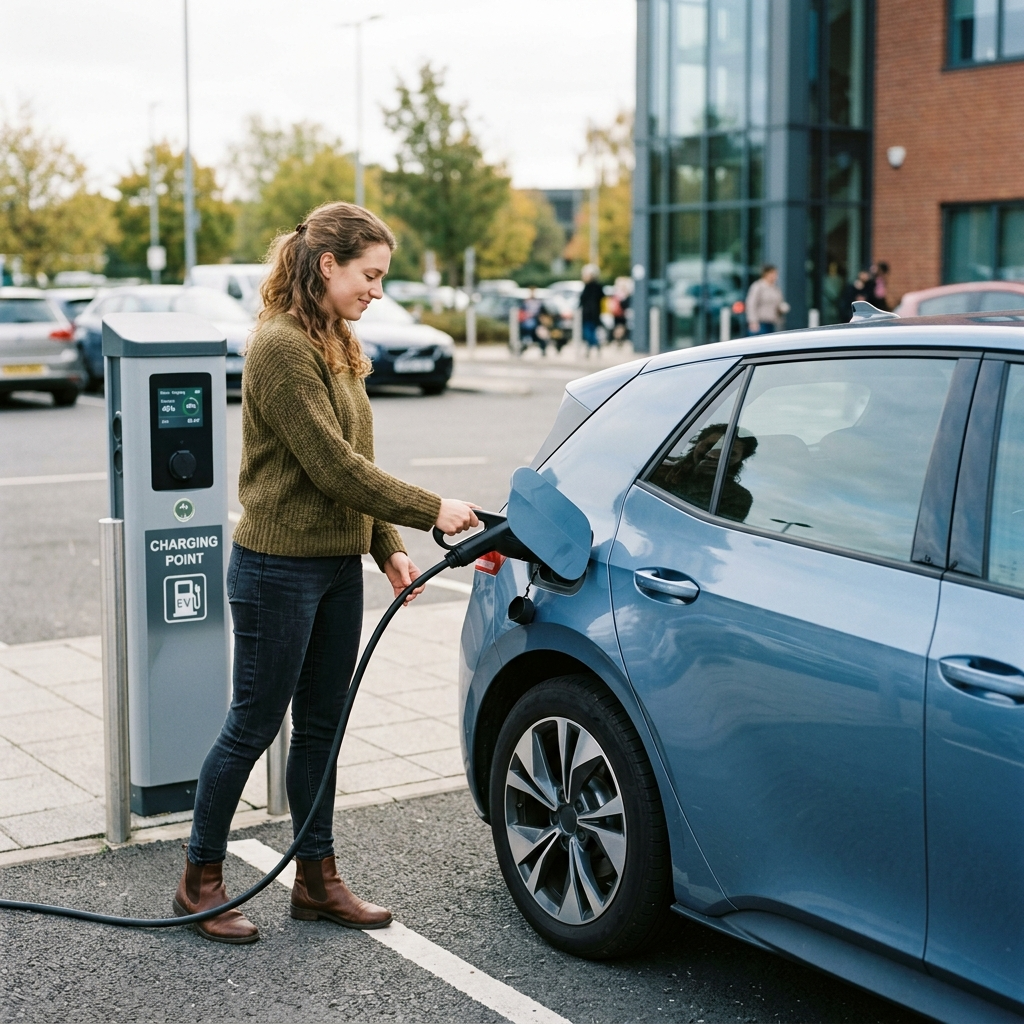
The Electric-Curious
EVs are gaining unstoppable momentum, with no signs of slowing down. But most non-EV drivers still lack the knowledge and exposure to feel confident making the switch. What's changed is the barrier to entry: a maturing used-EV market and a wave of new OEM entrants mean owning electric has never been more accessible, even if it doesn't yet feel that way to the average buyer.
This auto consumer is one seeking guidance and education over a sales pitch of the latest or flashiest release. Crucially, learning and understanding needs to go beyond charging and range, into honest, whole-life cost comparisons.

The Value Upgrader
Financial pressure is still the main concern for people buying a new car, but this hasn't stopped desire for one. It's changed how buyers want to pay. Financing is becoming more commonplace, but there are concerns about trust, transparency and affordability, which are pushing consumers toward alternatives. Leasing is growing to avoid large lump sums (while staying current with technology); salary sacrifice is more mainstream; and new subscriptions and hybrid cost models are popular with young buyers.
The cost-conscious automotive shopper is questioning the binary of buying vs leasing, and re-framing ownership to seek predictability amidst economic uncertainty, (whilst still seeking the latest innovations.)
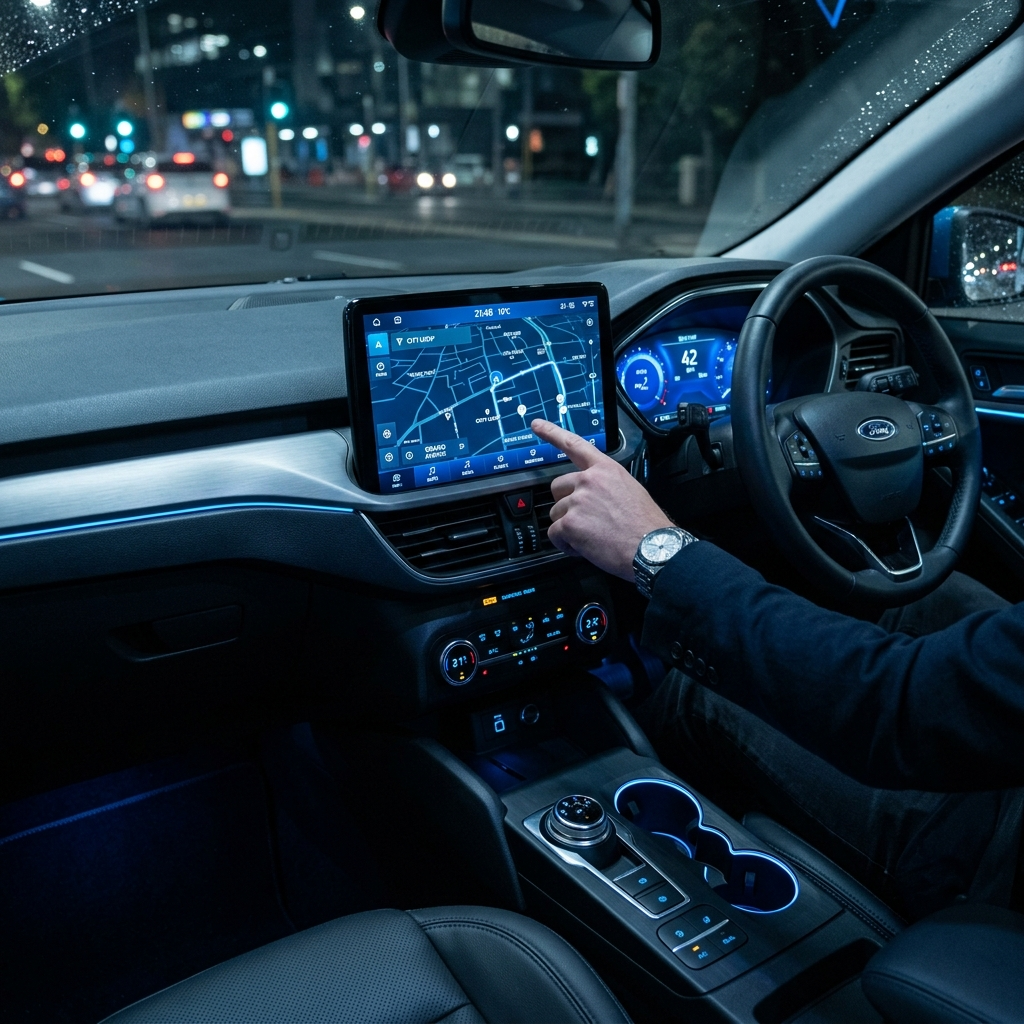
The Connected Driver
Connected technology is now a prerequisite in automotive – the expectation is for the industry to lead on the latest advancements. Cars now install updates directly to onboard software for safety, comfort, navigation, or entertainment. But there's a real gap between what's possible and what consumers actually use.
Notably, the features the future car shopper values most are safety and security over entertainment or convenience. The two biggest blockers: connected features locked behind subscriptions, and lack of trust in own-brand over third-party apps (Apple, Android etc). This consumer needs to experience value before they're asked to pay for it, and that case is strongest when it's framed around safety, not novelty.

The Agile Researcher
Consumer research for cars is rapidly changing. The consideration phase is now dominated by digital, with online research, comparison and affordability checks now key in the early journey. GenAI tools to support decisions are increasingly popular for all demographics, yet omnichannel remains, as many still want in-person reassurance before final commitment.
The future consumer is more open-minded to switching brands and embracing new tech, but they want the knowledge when doing this, and they are expanding channels to increase education and consideration. The dealer hasn't disappeared, but their job has moved to the end of the journey rather than the start of it.
In Context
Electric-Curious
Campaigns should lead with education over persuasion - comparison tools, myth-busting content and low-pressure onboarding will build trust faster than performance claims. Total cost of ownership needs to be addressed head-on, not left implicit, given how many would-be buyers are reversing course over exactly that.
Examples: Content-led education hubs - in the style of Autotrader's EV Hub or RAC's electric car guidance.
Value Upgrader
Marketing needs to foreground monthly cost clarity and flexible ownership routes as the headline, not the fine print and treat transparency itself as a selling point given how much distrust exists around financing. For younger audiences, subscription should be marketed as a genuine choice, not a stepping stone to "real" ownership, and sacrifice providers are winning by reframing ownership as a predictable monthly cost rather than a single high-stakes purchase.
Examples: Schemes as a predictable monthly cost to dispel financial concerns, and ease of accessibility/familiarity to buy (UK consumers are set to be able to order cars through Amazon).
Connected Driver
Brands should lead with safety and security. Pair it with plain-language data policies up front, give value away before asking for a subscription, and where in-car advertising is explored, ensure it is appropriately situated as consumers have not been receptive to technology that is too direct or disruptive.
Examples: Free-trial periods for connected features before any subscription ask.
Agile Researcher
Brands need a digital research layer - configurators, AI chat, comparison content - that's effective, combined with a smooth handoff to a dealer team who can close with reassurance rather than repeat what the customer already found online. Omnichannel needs to be at its most effective, as the perception of AI and chatbots is improving and increasingly trusted.
Example: Automakers introducing their own AI chatbots to try and own that research moment rather than lose it to a general-purpose tool.

Key Takeaways
- EV marketing is rising but not without concerns which must be addressed.
- Ownership is becoming a spectrum - brands need messaging that covers all.
- Safety, not novelty, is what earns trust in connected features - lead there, not with entertainment or convenience.
- Weak or ineffective AI tools now do more brand damage than having none at all - genuine usefulness matters more than presence.
Summary
The future automotive consumer isn't choosing between electric or petrol, owning or leasing, human or AI - they're choosing whichever brand makes each of those choices feel less like a gamble. The winners won't be the loudest in the room; they'll be the ones who showed up to address all their concerns in all the right places.
As a brand activation agency, adm Indicia helps automotive brands turn this future consumer understanding into marketing and campaign execution built to convert. Contact us to learn more about how we can help your brand.
Simplify your marketing execution and increase your performance


