
7 statistics about brand awareness that should be the foundation of every brand's strategy
by Helena Bush - Marketing & Insights Manager
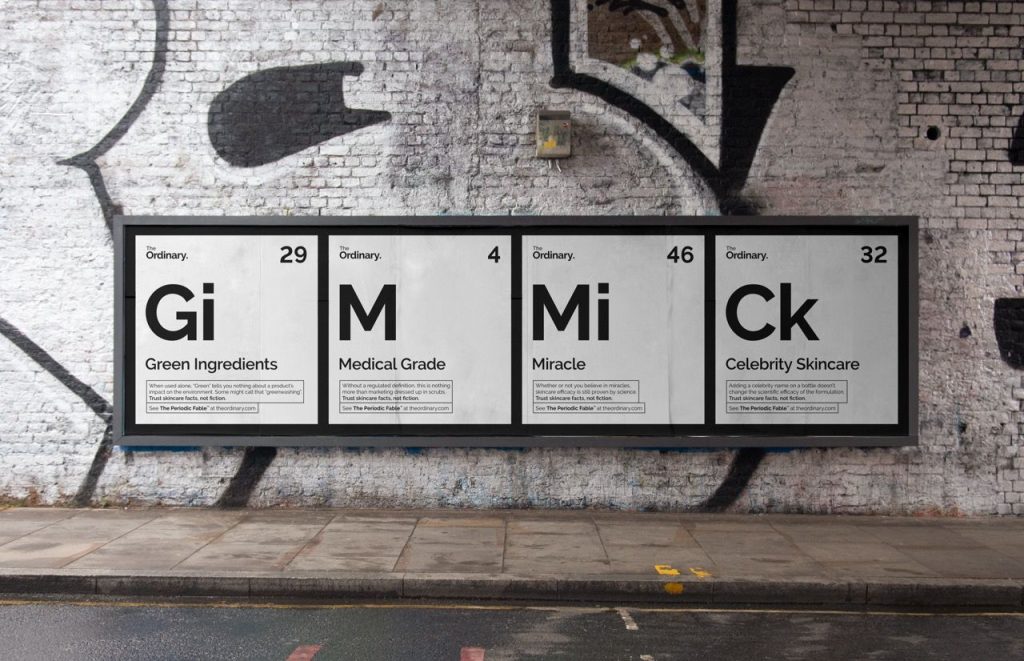
Brand awareness is one of the cornerstones of marketing. But it's often misunderstood - treated as secondary brand-building and disconnected from commercial return.
If we take a wider lens on the data though, it says otherwise. Here are seven key data points for brands to think about when targeting brand awareness, and how to optimise strategy for maximum effectiveness.
1. Brands in a shopper's first mental shortlist are up to 3x more likely to be bought.
And furthermore, 69% of the brands people switched to were ones already in their initial shortlist before they'd done any research at all.
This is a clear rebuttal to the idea that awareness spend is not a priority because it doesn't drive immediate ROI. A conversion campaign only works if the brand is already in the running. Without an awareness platform behind it, the campaign is competing to win a race where it was never even on the start line. Even when brand awareness doesn't see a measurable or direct return, it is laying the invisible foundations for just that.
2. 70% of consumers can't remember the last time a brand did anything that excited them
The same research also shows people are nearly twice as likely to buy from brands that bring them joy or surprise them, compared with brands that simply do what they say they will.
A great way for brands to generate awareness and memorability where their competitors aren't is to step outside the box. Brands shouldn't be afraid to be daring with awareness campaigns - turning a head by stepping outside their usual brand story or identity is much better than not turning a head at all.
3. Knowing a brand "very well" makes you 2.5x more likely to consider it
Familiarity, not just recognition, is what moves a brand from noticed to choice. "Very well" is a subjective spectrum, but one thing is certain: a single impression that registers a logo isn't the same as building real familiarity.
Sustained, repeated presence and storytelling wins over one-off bursts of reach. They key is a balance of quality with frequency, not just in how many people technically saw something.
4. 95% of category buyers aren't shopping right now
Only around 5% of category buyers are actively in-market at any given moment. The other 95% will be, but not today. So "buy now”-driven brand awareness isn't always the most effective.
Brand awareness that has real efficiency is that which clearly and quickly tells the story of when and why consumers need the product or service - so that when the occasion does arise, the brand is already the one that comes to mind. The work isn't to convince someone to buy today. It's to be remembered when they're ready to.
5. 82% of consumers want brands to engage as many of their senses as possible
Brand awareness limits itself if it sticks to a single-sensory approach. As well as the 82%, 63% actively wanting brands to deliver multisensory experiences more broadly, and this points to a gap in how most brands approach awareness: overwhelmingly visual, when consumers are asking for more.
The long-standing claim that scent is recalled with greater accuracy and memorability than images offers openings of growth for brands running awareness campaigns. Sound, texture and scent are under-used awareness channels, and particularly relevant for brands built around physical activations and point of sale.
6. 85% of consumers recall the brand after receiving a branded promotional item
This is the reminder that awareness doesn't end at the point of purchase. A branded glass behind a bar, a tote bag reused for months, a piece of merchandise that outlives the campaign that produced it — all keep building recognition long after conversion.
7. Gen Z are more likely to use the internet to find new ideas and inspiration (51%) than to research products or brands (42%)
If market oversaturation is a challenge, rather than lead with the product, brands can take a new angle and lead with the occasion.
For example, a consumer may not be looking for a new variety of wine, but they may be looking for a drink for a summer barbecue or a Sunday roast. Leading with an association campaign can drive brands to the top of consumers' minds at the consideration stage, and create foundational awareness.
Seven statistics, one key takeaway: brand awareness isn't excess budget, or a nice-to-have after ROI is secured. It's the foundation conversion depends on — and the brands treating it that way are the ones showing up on the shortlist before the competition even gets a chance to compete.
References
McKinsey & Company, "The Consumer Decision Journey" (2009)
VML, "The Age of Re-enchantment" (2023)
Tracksuit, brand-tracking data (2025)
Ehrenberg-Bass Institute, the "95:5 rule" (John Dawes, 2021)
VML, "The Age of Re-enchantment" (2023)
Advertising Specialty Institute (ASI), Global Advertising Impressions Study (2026)
GWI, "10 Retail Trends for 2026" (2026)
Simplify your marketing execution and increase your performance


